This is the multi-page printable view of this section. .
Database
- 1: Two Months into Maintaining a MinIO Fork
- 2: Palantir's 'Ontology' Hustle
- 3: MinIO Is Dead, Long Live MinIO
- 4: When Coding Becomes Cheap, What Still Matters?
- 5: The Agent Moat: Runtime
- 6: AI Ripped the Skin Off Software
- 7: New Programmers in the AI Era: Where Do You Go?
- 8: The Great Software Meltdown: When Translation Layers Get Squashed
- 9: Agent OS: We're Building DOS Again
- 10: Claude Code Observability
- 11: Claude Code Quick Start: Using Alternative LLMs at 1/10 the Cost
- 12: Data 2025: Year in Review with Mike Stonebraker
- 13: What Database Does AI Agent Need?
- 14: MySQL and Baijiu: The Internet’s Obedience Test
- 15: Victoria: The Observability Stack That Slaps the Industry
- 16: MinIO Is Dead. Who Picks Up the Pieces?
- 17: MinIO is Dead
- 18: When Answers Become Abundant, Questions Become the New Currency
- 19: On Trusting Open-Source Supply Chains
- 20: Don't Run Docker Postgres for Production!
- 21: DDIA 2nd Edition, Chinese Translation
- 22: Column: Database Guru
- 23: Dongchedi Just Exposed “Smart Driving.” Where’s Our Dongku-Di?
- 24: Google AI Toolbox: Production-Ready Database MCP is Here?
- 25: Where Will Databases and DBAs Go in the AI Era?
- 26: Stop Arguing, The AI Era Database Has Been Settled
- 27: Open Data Standards: Postgres, OTel, and Iceberg
- 28: The Lost Decade of Small Data
- 29: Scaling Postgres to the Next Level at OpenAI
- 30: How Many Shops Has etcd Torched?
- 31: In the AI Era, Software Starts at the Database
- 32: MySQL vs. PostgreSQL @ 2025
- 33: Database Planet Collision: When PG Falls for DuckDB
- 34: Comparing Oracle and PostgreSQL Transaction Systems
- 35: Database as Business Architecture
- 36: 7 Databases in 7 Weeks (2025)
- 37: Solving Poker 24 with a Single SQL Query
- 38: Self-Hosting Supabase on PostgreSQL
- 39: Modern Hardware for Future Databases
- 40: Can MySQL Still Catch Up with PostgreSQL?
- 41: Open-Source "Tyrant" Linus's Purge
- 42: Optimize Bio Cores First, CPU Cores Second
- 43: MongoDB Has No Future: Good Marketing Can't Save a Rotten Mango
- 44: MongoDB: Now Powered by PostgreSQL?
- 45: Switzerland Mandates Open-Source for Government Software
- 46: MySQL is dead, Long live PostgreSQL!
- 47: CVE-2024-6387 SSH Vulnerability Fix
- 48: Can Oracle Still Save MySQL?
- 49: Oracle Finally Killed MySQL
- 50: MySQL Performance Declining: Where is Sakila Going?
- 51: Can Chinese Domestic Databases Really Compete?
- 52: The $20 Brother PolarDB: What Should Databases Actually Cost?
- 53: Redis Going Non-Open-Source is a Disgrace to "Open-Source" and Public Cloud
- 54: How Can MySQL's Correctness Be This Garbage?
- 55: Database in K8S: Pros & Cons
- 56: Are Specialized Vector Databases Dead?
- 57: Are Databases Really Being Strangled?
- 58: Which EL-Series OS Distribution Is Best?
- 59: What Kind of Self-Reliance Do Infrastructure Software Need?
- 60: Back to Basics: Tech Reflection Chronicles
- 61: Database Demand Hierarchy Pyramid
- 62: Are Microservices a Bad Idea?
- 63: NewSQL: Distributive Nonsense
- 64: Time to Say Goodbye to GPL
- 65: Is running postgres in docker a good idea?
- 66: Understanding Time - Leap Years, Leap Seconds, Time and Time Zones
- 67: Understanding Character Encoding Principles
- 68: Concurrency Anomalies Explained
- 69: Blockchain and Distributed Databases
- 70: Consistency: An Overloaded Term
- 71: Why Study Database Principles
1 - Two Months into Maintaining a MinIO Fork
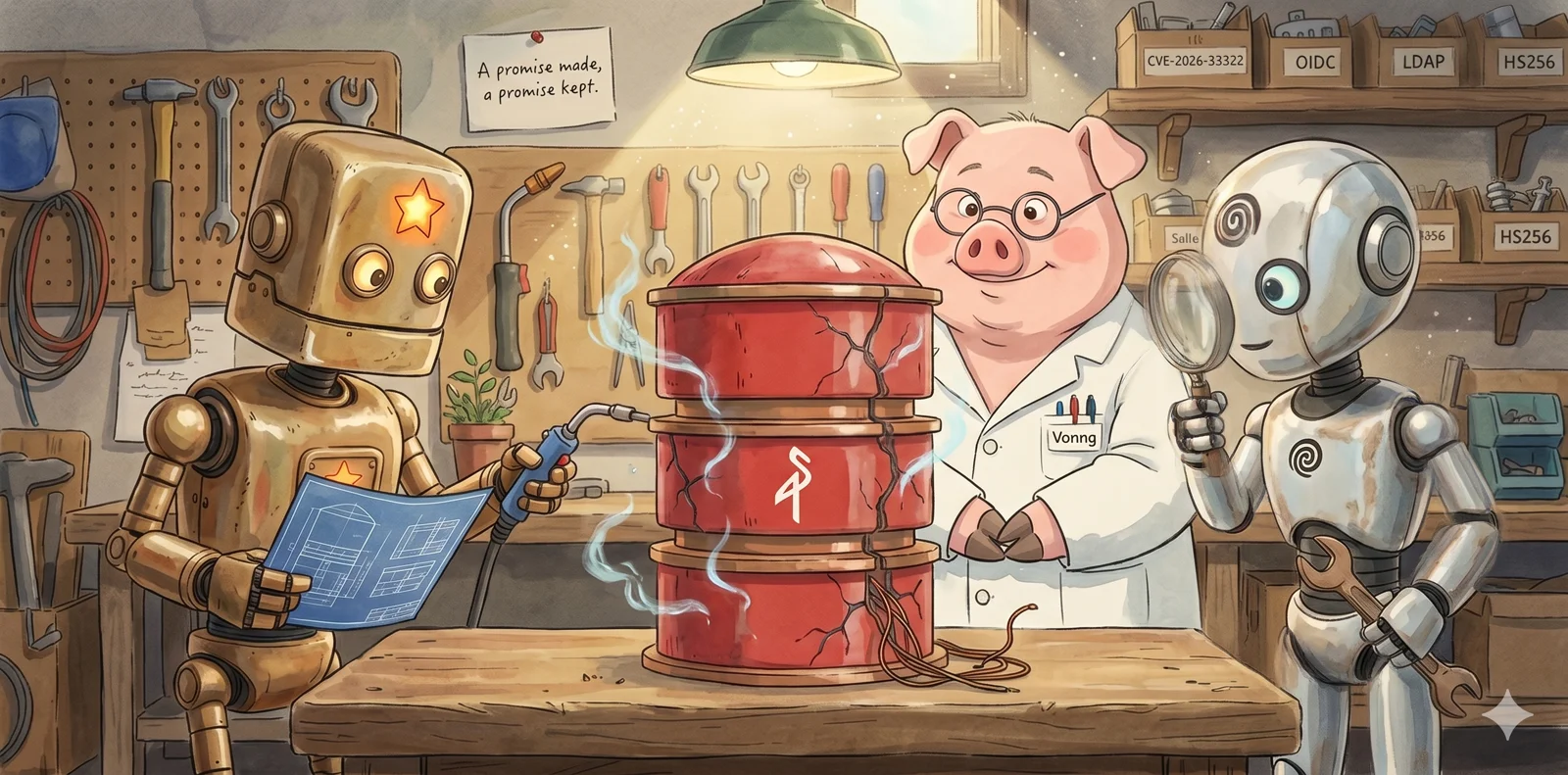
Two months after forking MinIO, pgsty/minio ships patches for four CVEs and related security issues. No new features, just working builds, a restored console, and timely security fixes. Read more
2 - Palantir's 'Ontology' Hustle

Ontology is database modeling. The word’s only function is to make people who don’t understand databases think they’re looking at something new — and happily pay a thousand times more for something old. Read more
3 - MinIO Is Dead, Long Live MinIO

MinIO’s repo is officially archived and abandoned. And how AI Agents helped bring MinIO back from the dead. Read more
4 - When Coding Becomes Cheap, What Still Matters?

Codex 5.3 xHigh pushed my workflow past a tipping point: writing code is no longer the scarce resource. The real leverage is design quality and engineering acceptance. This is the practical loop I use to ship reliable software with AI agents. Read more
5 - The Agent Moat: Runtime

A mediocre local who knows the terrain beats a genius parachuted into unknown territory. Intelligence without context is idle. An agent without a runtime is vapor. Read more
6 - AI Ripped the Skin Off Software

Software stocks are melting down. Who survives? Who rises? AI stripped away software’s skin, exposing the database skeleton underneath. The market isn’t panic-selling — it’s repricing. Read more
7 - New Programmers in the AI Era: Where Do You Go?

Should we still hire fresh grads? Squeezed between AI and senior devs, what’s the play for new programmers? Master the right tools, take initiative, find the right mentor. Read more
8 - The Great Software Meltdown: When Translation Layers Get Squashed
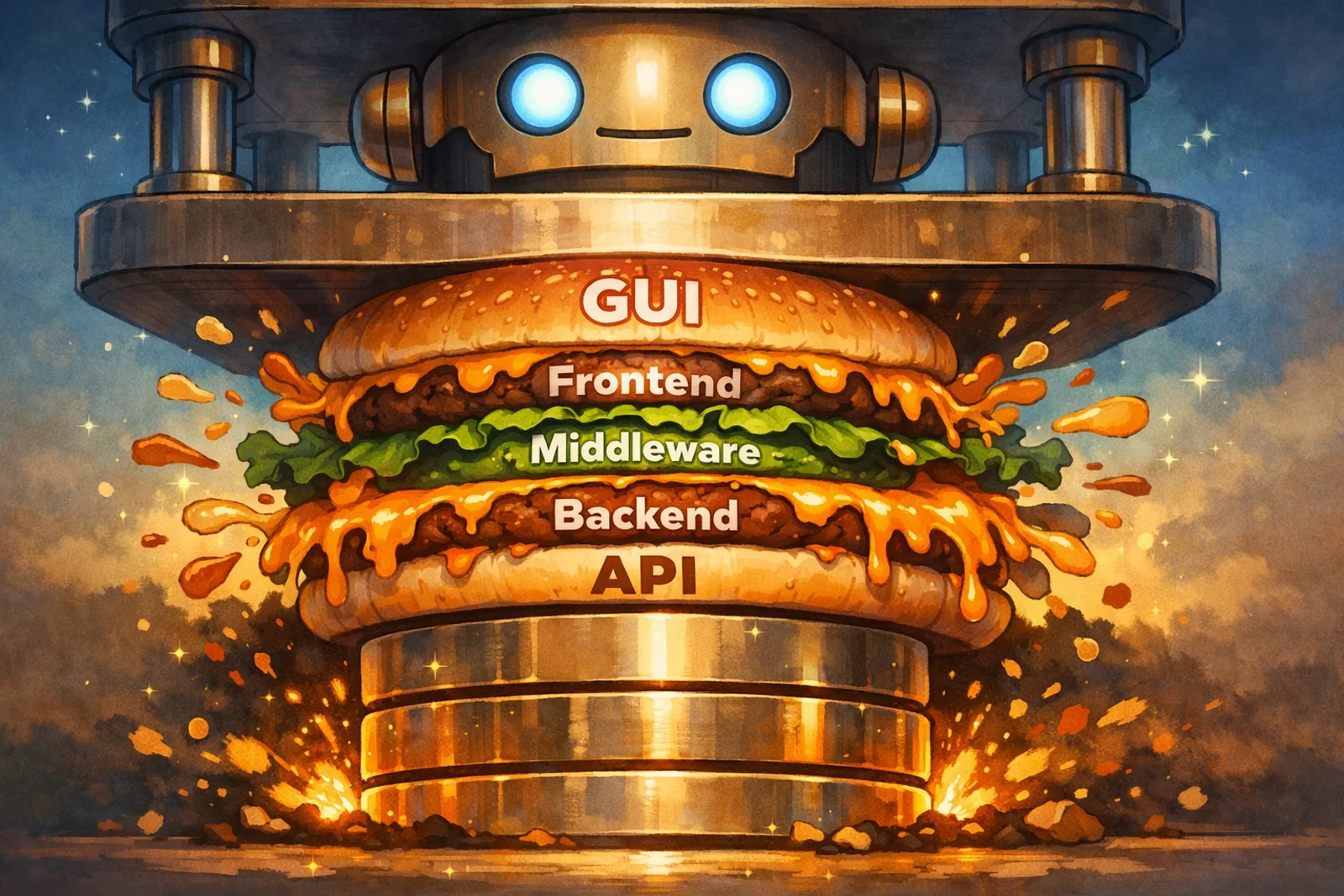
SaaS and workflow software are dead. From APPs & GUIs to Agents, Databases, and CLI. Read more
9 - Agent OS: We're Building DOS Again
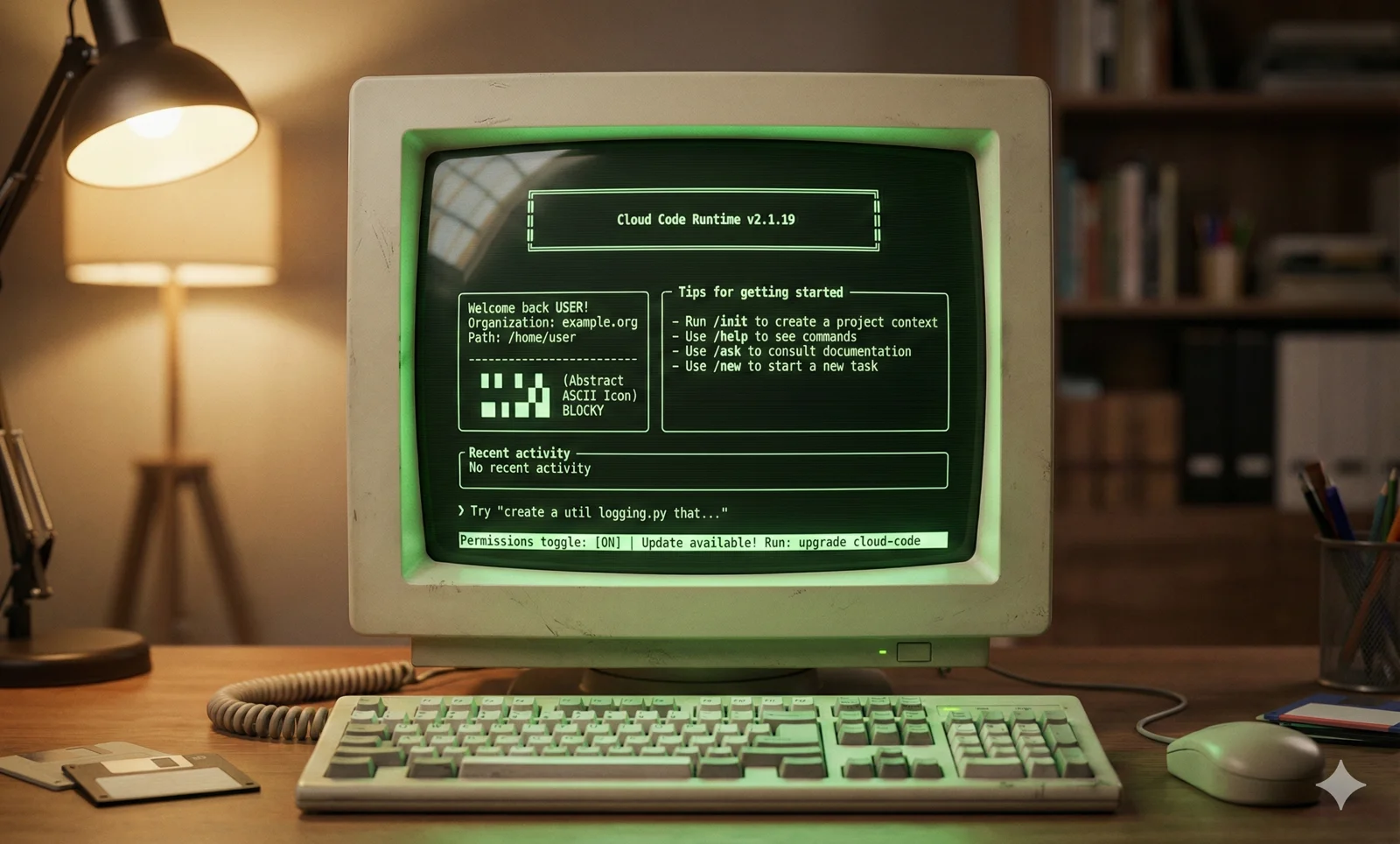
LLM = CPU. Context = RAM. Database = Disk. Agent = App. The mapping is surprisingly clean. And if OS history is any guide, we may know what comes next — and what’s still missing. Read more
10 - Claude Code Observability

Export Claude Code’s OTEL logs and metrics to Victoria stack, visualize with Grafana dashboards. Read more
11 - Claude Code Quick Start: Using Alternative LLMs at 1/10 the Cost

How to install and use Claude Code? How to achieve similar results at 1/10 of Claude’s cost with alternative models? A one-liner to get CC up and running! Read more
12 - Data 2025: Year in Review with Mike Stonebraker

A conversation between Mike Stonebraker (Turing Award Winner, Creator of PostgreSQL), Andy Pavlo (Carnegie Mellon), and the DBOS team. Read more
13 - What Database Does AI Agent Need?

The bottleneck for AI agents isn’t in database engines but in upper-layer integration. Muscle memory, associative memory, and trial-and-error courage will be key. Read more
14 - MySQL and Baijiu: The Internet’s Obedience Test

MySQL is to the internet what baijiu is to China: harsh, hard to swallow, yet worshipped because culture demands obedience. Both are loyalty tests—will you endure discomfort to fit in? Read more
15 - Victoria: The Observability Stack That Slaps the Industry

VictoriaMetrics is brutally efficient—using a fraction of Prometheus + Loki’s resources for multiples of the performance. Pigsty v4 swaps to the Victoria stack; here’s the beta for anyone eager to try it. Read more
16 - MinIO Is Dead. Who Picks Up the Pieces?
MinIO just entered maintenance mode. What replaces it? Can RustFS step in? I tested the contenders so you don’t have to. Read more
17 - MinIO is Dead

MinIO announces that it is entering maintenance mode: the dragon-slayer has become the dragon. This is how MinIO transformed from an open-source S3 alternative into just another commercial software company. Read more
18 - When Answers Become Abundant, Questions Become the New Currency

Your ability to ask questions—and your taste in what to ask—determines your position in the AI era. When answers become commodities, good questions become the new wealth. We are living in the moment this prophecy comes true. Read more
19 - On Trusting Open-Source Supply Chains

In serious production you can’t rely on an upstream that explicitly says “no guarantees.” When someone says “don’t count on me,” the right answer is “then I’ll run it myself.” Read more
20 - Don't Run Docker Postgres for Production!

Tons of users running the official docker postgres image got burned during recent minor version upgrades. A friendly reminder: think twice before containerizing production databases. Read more
21 - DDIA 2nd Edition, Chinese Translation

The second edition of Designing Data-Intensive Applications has released ten chapters. I translated them into Chinese and rebuilt a clean Hugo/Hextra web version for the community. Read more
22 - Column: Database Guru

The database world is full of hype and marketing fog. This column cuts through it with blunt commentary on industry trends and product reality. Read more
23 - Dongchedi Just Exposed “Smart Driving.” Where’s Our Dongku-Di?

Imagine a “closed-course” shootout for domestic databases and clouds, the way Dongchedi just humiliated 30+ autonomous cars. This industry needs its own stress test. Read more
24 - Google AI Toolbox: Production-Ready Database MCP is Here?

Google recently launched a database MCP toolbox, perhaps the first production-ready solution. Read more
25 - Where Will Databases and DBAs Go in the AI Era?

Who will be revolutionized first - OLTP or OLAP? Integration vs specialization, how to choose? Where will DBAs go in the AI era? Feng’s views from the HOW 2025 conference roundtable, organized and published. Read more
26 - Stop Arguing, The AI Era Database Has Been Settled

The database for the AI era has been settled. Capital markets are making intensive moves on PostgreSQL targets, with PG having become the default database for the AI era. Read more
27 - Open Data Standards: Postgres, OTel, and Iceberg
Author: Paul Copplestone (Supabase CEO) | Original: Open Data Standards: Postgres, OTel, and Iceberg

Three emerging standards in the data world: Postgres, OpenTelemetry, and Iceberg. Postgres is already the de facto standard. Read more
28 - The Lost Decade of Small Data
Author: Hannes Mühleisen (DuckDB Labs) | Original: The Lost Decade of Small Data

If DuckDB had launched in 2012, the great migration to distributed analytics might never have happened. Data isn’t that big after all. Read more
29 - Scaling Postgres to the Next Level at OpenAI
At PGConf.Dev 2025, Bohan Zhang from OpenAI shared a session titled Scaling Postgres to the next level at OpenAI, giving us a peek into the database usage of a top-tier unicorn.
“At OpenAl, we’ve proven that PostgreSQL can scale to support massive read-heavy workloads - even without sharding - using a single primary writer”
—— Bohan Zhang from OpenAI, PGConf.Dev 2025

Bohan Zhang is a member of the OpenAI Infra team, student of Andy Pavlo, and co-found OtterTune with him.
This article is based on Bohan’s presentation at the conference. with chinese translation/commentary by Ruohang Feng (Vonng): Author of Pigsty. The original chinese version is available on WeChat Column and Pigsty CN Blog.
Hacker News Discussion: OpenAI: Scaling Postgres to the Next Level
Background
Postgres is the backbone of our most critical systems at OpenAl. If Postgres goes down, many of OpenAI’s key features go down with it — and there’s plenty of precedent for this. PostgreSQL-related failures have caused several ChatGPT outages in the past.

OpenAI uses managed PostgreSQL databases on Azure, without sharding. Instead, they employ a classic primary-replica replication architecture with one primary and over dozens of read replicas. For a service with several hundred million active users like OpenAI, scalability is a major concern.
Challenges
In OpenAI’s PostgreSQL architecture, read scalability is excellent, but “write requests” have become the primary bottleneck. OpenAI has already made many optimizations here, such as offloading write workloads wherever possible and avoiding placing new business logic into the main database.

PostgreSQL’s MVCC design has some known issues, such as table and index bloat. Tuning autovacuum is complex, and every write generates a completely new version of a row. Index access might also require additional heap fetches for visibility checks. These design choices create challenges for scaling read replicas: for instance, more WAL typically leads to greater replication lag, and as the number of replicas grows, network bandwidth can become the new bottleneck.
Measures
To tackle these issues, we’ve made efforts on multiple fronts:
Reduce Load on Primary
The first optimization is to smooth out write spikes on the primary and minimize its load as much as possible, for example:
- Offloading all possible writes.
- Avoiding unnecessary writes at the application level.
- Using lazy writes to smooth out write bursts.
- Controlling the rate of data backfilling.
Additionally, OpenAI offloads as many read requests as possible to replicas. The few read requests that cannot be moved from the primary because they are part of read-write transactions are required to be as efficient as possible.

Query Optimization
The second area is query-level optimization. Since long-running transactions can block garbage collection and consume resources, they use timeout settings to prevent long “idle in transaction” states and set session, statement, and client-level timeouts. They also optimized some multi-way JOIN queries (e.g., joining 12 tables at once). The talk specifically mentioned that using ORMs can easily lead to inefficient queries and should be used with caution.

Mitigating Single Points of Failure
The primary is a single point of failure; if it goes down, writes are blocked. In contrast, we have many read-only replicas. If one fails, applications can still read from others. In fact, many critical requests are read-only, so even if the primary goes down, they can continue to serve reads.
Furthermore, we’ve distinguished between low-priority and high-priority requests. For high-priority requests, OpenAI allocates dedicated read-only replicas to prevent them from being impacted by low-priority ones.

Schema Management
The fourth measure is to allow only lightweight schema changes on this cluster. This means:
- Creating new tables or adding new workloads to it is not allowed.
- Adding or removing columns is allowed (with a 5-second timeout), but any operation that requires a full table rewrite is forbidden.
- Creating or removing indexes is allowed, but must be done using
CONCURRENTLY.
Another issue mentioned was that persistent long-running queries (>1s) would continuously block schema changes, eventually causing them to fail. The solution was to have the application optimize or move these slow queries to replicas.

Results
- Scaled PostgreSQL on Azure to millions of QPS, supporting OpenAI’s critical services.
- Added dozens of replicas without increasing replication lag.
- Deployed read-only replicas to different geographical regions while maintaining low latency.
- Only one SEV0 incident related to PostgreSQL in the past nine months.
- Still have plenty of room for future growth.

“At OpenAl, we’ve proven that PostgreSQL can scale to support massive read-heavy workloads - even without sharding - using a single primary writer”
Case Studies
OpenAI also shared a few case studies of failures they’ve faced. The first was a cascading failure caused by a redis outage.

The second incident was more interesting: extremely high CPU usage triggered a bug where the WALSender process kept spin-looping instead of sending WAL to replicas, even after CPU levels returned to normal. This led to increased replication lag.

Feature Suggestions
Finally, Bohan raised some questions and feature suggestions to the PostgreSQL developer community:
First, regarding disabling indexes. Unused indexes cause write amplification and extra maintenance overhead. They want to remove useless indexes, but to minimize risk, they wish for a feature to “disable” an index. This would allow them to monitor performance metrics to ensure everything is fine before actually dropping it.

Second is about RT observability. Currently, pg_stat_statement only provides the average response time for each query type, but doesn’t directly offer latency metrics like p95 or p99. They hope for more histogram-like and percentile latency metrics.

The third point is about schema changes. They want PostgreSQL to record a history of schema change events, such as adding/removing columns and other DDL operations.

The fourth case is about the semantics of monitoring views. They found a session with state = 'active' and wait_event = 'ClientRead' that lasted for over two hours. This means a connection remained active long after query_start, and such connections can’t be killed by the idle_in_transaction_timeout. They wanted to know if this is a bug and how to resolve it.

Finally, a suggestion for optimizing PostgreSQL’s default parameters. The default values are too conservative. Could better defaults be used, or perhaps a heuristic-based configuration rule?
Vonng’s Commentary
Although PGConf.Dev 2025 is primarily focused on development, you often see use case presentations from users, like this one from OpenAI on their PostgreSQL scaling practices. These topics are actually quite interesting for core developers, as many of them don’t have a clear picture of how PostgreSQL is used in extreme scenarios, and these talks are very helpful.

Since late 2017, I managed dozens of PostgreSQL clusters at Tantan, which was one of the largest and most complex PG deployments in the Chinese internet scene: dozens of PG clusters with around 2.5 million QPS. Back then, our largest core primary had a 1-primary-33-replica setup, with a single cluster handling around 400K QPS. The bottleneck was also on single-database writes, which we eventually solved with application-side sharding, similar to Instagram’s approach.
You could say I’ve encountered all the problems and used all the solutions OpenAI mentioned in their talk. Of course, the difference is that today’s top-tier hardware is orders of magnitude better than it was eight years ago. This allows a startup like OpenAI to serve its entire business with a single PostgreSQL cluster without sharding. This is undoubtedly another powerful piece of evidence for the argument that “Distributed Databases Are a False Need”.
During the Q&A, I learned that OpenAI uses managed PostgreSQL on Azure with the highest available server hardware specs. They have dozens of replicas, including some in different geographical regions, and this behemoth cluster handles a total of about millions QPS. They use Datadog for monitoring, and the services access the RDS cluster from Kubernetes through a business-side PgBouncer connection pool.
As a strategic customer, the Azure PostgreSQL team provides them with dedicated support. But it’s clear that even with top-tier cloud database services, the customer needs to have sufficient knowledge and skill on the application and operations side. Even with the brainpower of OpenAI, they still stumble on some of the practical driving lessons of PostgreSQL.
During the social event after the conference, I had a great chat with Bohan and two other database founders until the wee hours. The off-the-record discussions were fascinating, but I can’t disclose more here, haha.

Vonng’s Q&A
Regarding the questions and feature requests Bohan raised, I can offer some answers here.
Most of the features OpenAI wants already exist in the PostgreSQL ecosystem, they just might not be available in the vanilla PG kernel or in a managed cloud database environment.
On Disabling Indexes
PostgreSQL actually has a “feature” to disable indexes. You just need to update the indisvalid field in the pg_index system catalog to false. The planner will then stop using the index, but it will continue to be maintained during DML operations. In principle, there’s nothing wrong with this, as concurrent index creation uses these two flags (isready, isvalid). It’s not black magic.
However, I can understand why OpenAI can’t use this method: it’s an undocumented “internal detail” rather than a formal feature. But more importantly, cloud databases usually don’t grant superuser privileges, so you just can’t update the system catalog like this.
But back to the original need — fear of accidentally deleting an index. There’s a simpler solution: just confirm from monitoring view (pg_stat_all_indexes) that the index isn’t being used on either the primary or the replicas. If you know an index hasn’t been used for a long time, you can safely delete it.
Monitoring index switch with Pigsty PGSQL TABLES Dashboard

On Observability
Actually, pg_stat_statements provides the mean and stddev metrics, which you can use with properties of the normal distribution to estimate percentile metrics. But this is only a rough estimate, and you need to reset the counters periodically, otherwise the effectiveness of the full historical statistics will degrade over time.
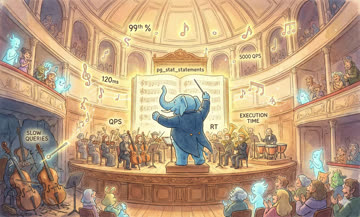
RT Distribution with PGSQL QUERY Dashboard from PGSS
PGSS is unlikely to provide P95, P99 RT percentile metrics anytime soon, because it would increase the extension’s memory footprint by several dozen times. While that’s not a big deal for modern servers, it could be an issue in extremely conservative environments. I asked the maintainer of PGSS about this at the Unconference, and it’s unlikely to happen in the short term. I also asked Jelte, the maintainer of Pgbouncer, if this could be solved at the connection pool level, and a feature like that is not coming soon either.
However, there are other solutions to this problem. First, the pg_stat_monitor extension explicitly provides detailed percentile RT metrics, but you have to consider the performance impact of collecting these metrics on the cluster. A universal, non-intrusive method with no database performance overhead is to add query RT monitoring directly at the application’s Data Access Layer (DAL), but this requires cooperation and effort from the application side.
Also, using eBPF for side-channel collection of RT metrics is a great idea, but considering they’re using managed PostgreSQL on Azure, they won’t have server access, so that path is likely blocked.
On Schema Change History
Actually, PostgreSQL’s logging already provides this option. You just need to set log_statement to ddl (or the more advanced mod or all), and all DDL logs will be preserved. The pgaudit extension also provides similar functionality.
But I suspect what they really want isn’t DDL logs, but something like a system view that can be queried via SQL. In that case, another option is CREATE EVENT TRIGGER. You can use an event trigger to log DDL events directly into a data table. The pg_ddl_historization extension provides a more convenient way to do this, and I’ve compiled and packaged this extension as well.
Creating an event trigger also requires superuser privileges. AWS RDS has some special handling to allow this, but it seems that PostgreSQL on Azure does not support it.
On Monitoring View Semantics
In OpenAI’s example, pg_stat_activity.state = active means the backend process is still within the lifecycle of a single SQL statement. The WaitEvent = ClientRead means the process is on the CPU waiting for data from the client. When both appear together, a typical example is an idle COPY FROM STDIN, but it could also be TCP blocking or being stuck between BIND / EXECUTE. So it’s hard to say if it’s a bug without knowing what the connection is actually doing.
Some might argue that waiting for client I/O should be considered “idle” from a CPU perspective. But state tracks the execution state of the statement itself, not whether the CPU is busy. state = 'active' means the PostgreSQL backend considers “this statement is not yet finished.” Resources like row locks, buffer pins, snapshots, and file handles are considered “in use.” This doesn’t mean it’s running on the CPU. When the process is running on the CPU in a loop waiting for client data, the wait event is ClientRead. When it yields the CPU and “waits” in the background, the wait event is NULL.
But back to the problem itself, there are other solutions. For example, in Pigsty, when accessing PostgreSQL through HAProxy, we set a connection timeout at the LB level for the primary service, defaulting to 24 hours. More stringent environments would have a shorter timeout, like 1 hour. This means any connection lasting over an hour would be terminated. Of course, this also needs to be configured with a corresponding max lifetime in the application-side connection pool, to proactively close connections rather than having them be cut off. For offline, read-only services, this parameter can be omitted to allow for ultra-long queries that might run for two or three days. This provides a safety net for these active-but-waiting-on-I/O situations.
But I also doubt whether Azure PostgreSQL offers this kind of control.
On Default Parameters
PostgreSQL’s default parameters are quite conservative. For example, it defaults to using 128 MB of memory (the minimum can be set to 128 KB!). On the bright side, this allows its default configuration to run in almost any environment. On the downside, I’ve actually seen a case of a production system with 1TB of physical memory running with the 128 MB default… (thanks to double buffering, it actually ran for a long time).
But overall, I think conservative defaults aren’t a bad thing. This issue can be solved in a more flexible, dynamic configuration process. RDS and Pigsty both provide pretty good initial parameter heuristic config rules, which fully address this problem. But this feature could indeed be added to the PG command-line tools, for example, having initdb automatically detect CPU/memory count, disk size, and storage type and set optimized parameter values accordingly.
Self-hosted PostgreSQL?
The challenges OpenAI raised are not really from PostgreSQL itself, but from the additional limitations of managed cloud services. One solution is to use the IaaS layer and self-host a PostgreSQL cluster on instances with local NVMe SSD storage to bypass these restrictions.
In fact, my project Pigsty built for ourselves to solve PostgreSQL challenges at a similar scale. It scales well, having supported Tantan’s 25K vCPU PostgreSQL cluster and 2.5M QPS. It includes solutions for all the problems mentioned above, and even for many that OpenAI hasn’t encountered yet. And in a self-hosting manner, open-source, free, and ready to use out of the box.
If OpenAI is interested, I’d certainly be happy to provide some help. But I think when you’re in a phase of hyper-growth, fiddling with database infra is probably not a high-priority item. Fortunately, they still have excellent PostgreSQL DBAs who can continue to forge these paths.
References
[1] HackerNews OpenAI: Scaling Postgres to the Next Level: https://news.ycombinator.com/item?id=44071418#44072781
[2] PostgreSQL is eating the database world: https://pigsty.io/blog/pg/pg-eat-db-world/
[3] Chinese: Scaling Postgres to the Next Level at OpenAI https://pigsty.cc/db/openai-pg/
[4] The part of PostgreSQL we hate the most: https://www.cs.cmu.edu/~pavlo/blog/2023/04/the-part-of-postgresql-we-hate-the-most.html
[5] PGConf.Dev 2025: https://2025.pgconf.dev/schedule.html
[6] Schedule: Scaling Postgres to the next level at OpenAI: https://www.pgevents.ca/events/pgconfdev2025/schedule/session/433-scaling-postgres-to-the-next-level-at-openai/
[7] Bohan Zhang: https://www.linkedin.com/in/bohan-zhang-52b17714b
[8] Ruohang Feng / Vonng: https://github.com/Vonng/
[9] Pigsty: https://pigsty.io
[10] Instagram’s Sharding IDs: https://instagram-engineering.com/sharding-ids-at-instagram-1cf5a71e5a5c
[11] Reclaim hardware bonus: https://pigsty.io/blog/cloud/bonus/
[12] Distributed Databases Are a False Need: https://pigsty.io/blog/db/distributive-bullshit/
30 - How Many Shops Has etcd Torched?

Plenty. If you’re rolling your own Kubernetes, odds are you’ll crash because etcd ships with a 2 GB time bomb. Read more
31 - In the AI Era, Software Starts at the Database
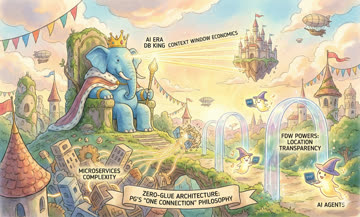
Future software = Agent + Database. No middle tiers, just agents issuing CRUD. Database skills age well, and PostgreSQL is poised to be the agent-era default. Read more
32 - MySQL vs. PostgreSQL @ 2025

A 2025 reality check on where PostgreSQL stands relative to MySQL across features, performance, quality, and ecosystem. Read more
33 - Database Planet Collision: When PG Falls for DuckDB

If you ask me, we’re on the brink of a cosmic collision in database-land, and Postgres + DuckDB is the meteor we should all be watching. Read more
34 - Comparing Oracle and PostgreSQL Transaction Systems

The PG community has started punching up: Cybertec’s Laurenz Albe breaks down how Oracle’s transaction system stacks against PostgreSQL. Read more
35 - Database as Business Architecture

Databases are the core of business architecture, but what happens if we go further and let databases become the business architecture itself? Read more
36 - 7 Databases in 7 Weeks (2025)

Is PostgreSQL the king of boring databases? Here are seven databases worth studying in 2025: PostgreSQL, SQLite, DuckDB, ClickHouse, FoundationDB, TigerBeetle, and CockroachDB—each deserving a week of deep exploration. Read more
37 - Solving Poker 24 with a Single SQL Query

An interesting but tricky puzzle: solving the 24 game with SQL. The PostgreSQL solution. Read more
38 - Self-Hosting Supabase on PostgreSQL
Supabase is an open-source PostgreSQL-based BaaS. It provides authentication, Realtime, Edge Functions, object storage, and REST APIs generated from the database schema; enabling pg_graphql on demand also provides GraphQL APIs.
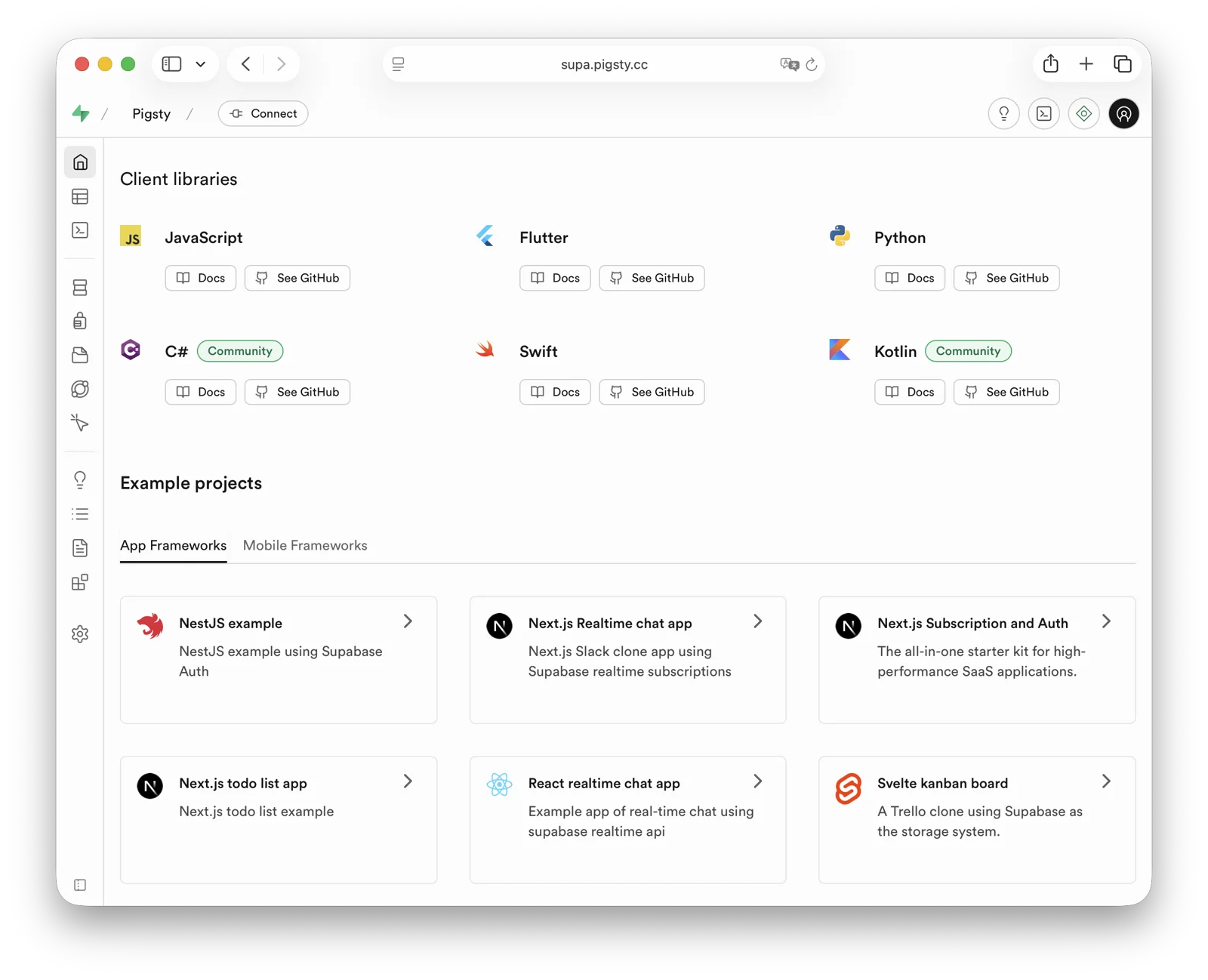
Self-hosting can make sense when you need control over data and infrastructure, isolated or compliant operation, or freedom to choose PostgreSQL versions and extensions. The official Supabase self-hosting guide recommends Docker and states that self-hosters are responsible for servers, security hardening, database maintenance, high availability, backups, and monitoring. Pigsty is an independent community integration and is not currently listed among the community projects on that page.
Pigsty v4.5’s supabase template moves stateful components under Pigsty management: the PGSQL module manages PostgreSQL, while the MINIO module’s current Silo implementation provides object storage. Auth, Storage, Realtime, Studio, and the other stateless services run through Docker Compose. The template supports PostgreSQL 15-18 (18 by default) and can use the 600 PostgreSQL extensions in the current Pigsty catalog.
This article was originally published on 25 November 2024 and revalidated against the current Pigsty v4.5 source on 14 August 2026. The continuously maintained Enterprise Self-Hosted Supabase reference is the single source of truth for deployment parameters and procedures.
Quick Start
The complete Supabase stack needs at least 2 CPU cores and 4 GB of RAM; 4 cores and 8 GB or more are recommended. Prepare a supported Linux system, download the current public stable Pigsty release, generate the inventory, and change every domain, password, and key before deployment:
deploy.yml is the standard single-node deployment entry point. The -l supabase limits the Docker and application playbooks to the intended host group. After installation, Supabase Studio is available at http://<node-ip>:8000. The template’s supabase / pigsty credentials are demonstration defaults and must never remain in production.
Before running the deployment, verify that:
JWT_SECRET,ANON_KEY,SERVICE_ROLE_KEY, Dashboard, Logflare, Realtime, and S3 credentials were regenerated;API_EXTERNAL_URLretains the/auth/v1suffix, whileSITE_URLandSUPABASE_PUBLIC_URLuse the site root URL;- PostgreSQL role passwords match
POSTGRES_PASSWORD, and object-storage users match the S3 configuration; - public or OAuth deployments use a real domain and HTTPS;
pig pb infoconfirms a usable backup and a restore drill has succeeded.
See Security Hardening for exact variables, length constraints, source paths, and reload commands.
Architecture and Boundaries
The Pigsty template does not start the upstream Compose db or supavisor containers. Stateless services connect directly to the PostgreSQL service managed by Pigsty. The single-node template uses service port 5436, which always routes to the current primary.
Logflare / Analytics uses a dedicated _supabase database and its _analytics schema. Studio Query Performance reads pg_stat_statements compatibility objects in the extensions schema, while the actual extension remains in the monitor schema for Pigsty monitoring compatibility.
The default single-node template is suitable for evaluation, small workloads, and initial deployment, but it is not an HA topology. With only one server, use external S3 for both Supabase Storage and PostgreSQL backups to reduce whole-node failure risk. Actual RPO depends on recoverable backups, WAL archiving, and object-storage availability; it is not a fixed amount of data implied by the topology.
A production HA design normally needs:
- at least three ETCD nodes for the DCS;
- multi-node PostgreSQL with an explicitly selected synchronization policy;
- multi-node Silo or an independent highly available S3 service;
- multiple stateless Supabase replicas plus DNS, VIP, or HAProxy access;
- periodic restore, failover, and certificate-renewal drills.
The default norm preset targets RTO below 45 seconds, and asynchronous replication does not promise RPO=0. A target below 30 seconds while preserving acknowledged transactions requires the fast RTO preset plus the crit.yml strict-synchronous policy and must be demonstrated by failure tests. See High Availability and Deployment Planning.
Domains, Object Storage, and Mail
For production, configure the domain, reverse proxy, and certificate under infra_portal.supa, and set the three external URLs under apps.supabase.conf. After obtaining a certificate with make cert, update only the Supabase application configuration and containers with:
Supabase Storage can use Silo, cloud S3, or another S3-compatible service. Switching the PostgreSQL pgBackRest repository is a stateful change: check existing backups, run --check, and only after explicit authorization run ./pgsql.yml -t pg_backup -l <cluster>. Immediately create and verify a full backup in the new repository. Existing backups are not migrated automatically; see Switching Repositories.
Auth email requires a production SMTP provider. Put only the hostname in SMTP_HOST and the port in SMTP_PORT, then apply the change with the target-limited app.yml command.
The complete configuration example, Alibaba Cloud OSS fields, and SMTP parameters are in Enterprise Self-Hosted Supabase.
Why Pigsty
Supabase currently promises more than 50 preconfigured extensions and changes the exact list as the platform evolves. Pigsty v4.5 catalogs 600 extensions and packages Supabase dependencies including pg_graphql, pg_jsonschema, wrappers, index_advisor, pg_net, supabase_vault, pgjwt, pgsodium, supautils, and plan_filter.
Self-hosting does not mean “zero operations.” It returns control over versions, extensions, data, backups, and availability policy to the operator. It also makes that operator responsible for server maintenance, security updates, secret management, capacity planning, backup validation, and failure drills. Before starting, read the Supabase reference, security guide, and backup documentation.
39 - Modern Hardware for Future Databases
Author: Alex Miller (Snowflake, Apple, Google) | Original: Modern Hardware for Future Databases

A survey on how hardware developments affect database design, covering key advancements in networking, storage, and computing. Read more
40 - Can MySQL Still Catch Up with PostgreSQL?
Author: Peter Zaitsev (Percona Founder) | Original: Can MySQL Catch Up with PostgreSQL?

Percona founder Peter Zaitsev discusses whether MySQL can still keep up with PostgreSQL. His views largely represent the MySQL community’s perspective. Read more
41 - Open-Source "Tyrant" Linus's Purge

The Linux community is essentially imperial — and Linus himself is the earliest and most successful technical dictator. People are used to Linus’s generosity but forget this point. Read more
42 - Optimize Bio Cores First, CPU Cores Second

Programmers are expensive, scarce biological computing cores, the anchor point of software costs — please prioritize optimizing biological cores before optimizing CPU cores. Read more
43 - MongoDB Has No Future: Good Marketing Can't Save a Rotten Mango

MongoDB has a terrible track record on integrity, lackluster products and technology, gets beaten by PG in correctness, performance, and functionality, with collapsing developer reputation, declining popularity, stock price halving, and expanding losses. Provocative marketing against PG can’t save it with “good marketing.” Read more
44 - MongoDB: Now Powered by PostgreSQL?

MongoDB 3.2’s analytics subsystem turned out to be an embedded PostgreSQL database? A whistleblowing story from MongoDB’s partner about betrayal and disillusionment. Read more
45 - Switzerland Mandates Open-Source for Government Software

Switzerland’s government leads the way with open source legislation, showing IT developing countries how to ensure software sovereignty and control. True autonomy and control stem from “open source communities,” not some “nationalist” style “domestic software.” Read more
46 - MySQL is dead, Long live PostgreSQL!

This July, MySQL 9.0 was finally released—a full eight years after its last major version, 8.0 (@2016-09). Read more
47 - CVE-2024-6387 SSH Vulnerability Fix
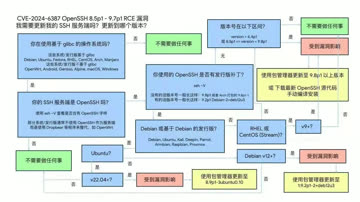
This vulnerability affects EL9, Ubuntu 22.04, Debian 12. Users should promptly update OpenSSH to fix this vulnerability. Read more
48 - Can Oracle Still Save MySQL?
Author: Peter Zaitsev (Percona Founder) | Original: Can Oracle Save MySQL?

Percona founder Peter Zaitsev publicly expressed disappointment with MySQL and Oracle, criticizing the declining performance with newer versions. Read more
49 - Oracle Finally Killed MySQL
Author: Peter Zaitsev (Percona Founder) | Original: Is Oracle Finally Killing MySQL?

Peter Zaitsev, founder of Percona, criticizes how Oracle’s actions and inactions have killed MySQL. About 15 years after acquiring Sun and MySQL. Read more
50 - MySQL Performance Declining: Where is Sakila Going?
Author: Marco Tusa (Percona) | Original: Sakila, Where Are You Going?

Higher MySQL versions mean worse performance? Percona monitoring shows slow migration from 5.7 to 8.x. PostgreSQL is pulling ahead. Read more
51 - Can Chinese Domestic Databases Really Compete?

Friends often ask me, can Chinese domestic databases really compete? To be honest, it’s a question that offends people. So let’s try speaking with data - I hope the charts provided in this article can help readers understand the database ecosystem landscape and establish more accurate proportional awareness. Read more
52 - The $20 Brother PolarDB: What Should Databases Actually Cost?

Today we discuss the fair pricing of commercial databases, open-source databases, cloud databases, and domestic Chinese databases. Read more
53 - Redis Going Non-Open-Source is a Disgrace to "Open-Source" and Public Cloud

Redis “going non-open source” is not a disgrace to Redis, but a disgrace to “open source/OSI” and even more so to public cloud. What truly matters has always been software freedom, while open source is just one means to achieve software freedom. Read more
54 - How Can MySQL's Correctness Be This Garbage?

MySQL’s transaction ACID has flaws and doesn’t match documentation promises. This may lead to serious correctness issues - use with caution. Read more
55 - Database in K8S: Pros & Cons
Whether databases should be housed in Kubernetes/Docker remains highly controversial. While Kubernetes (k8s) excels in managing stateless applications, it has fundamental drawbacks with stateful services, especially databases like PostgreSQL and MySQL.
In the previous article, “Databases in Docker: Good or Bad,” we discussed the pros and cons of containerizing databases. Today, let’s delve into the trade-offs in orchestrating databases in K8S and explore why it’s not a wise decision.
Summary
Kubernetes (k8s) is an exceptional container orchestration tool aimed at helping developers better manage a vast array of complex stateless applications. Despite its offerings like StatefulSet, PV, PVC, and LocalhostPV for supporting stateful services (i.e., databases), these features are still insufficient for running production-level databases that demand higher reliability.
Databases are more like “pets” than “cattle” and require careful nurturing. Treating databases as “cattle” in K8S essentially turns external disk/file system/storage services into new “database pets.” Running databases on EBS/network storage presents significant disadvantages in reliability and performance. However, using high-performance local NVMe disks will make the database bound to nodes and non-schedulable, negating the primary purpose of putting them in K8S.
Placing databases in K8S results in a “lose-lose” situation - K8S loses its simplicity in statelessness, lacking the flexibility to quickly relocate, schedule, destroy, and rebuild like purely stateless use. On the other hand, databases suffer several crucial attributes: reliability, security, performance, and complexity costs, in exchange for limited “elasticity” and utilization - something virtual machines can also achieve. For users outside public cloud vendors, the disadvantages far outweigh the benefits.
The “cloud-native frenzy,” exemplified by K8S, has become a distorted phenomenon: adopting k8s for the sake of k8s. Engineers add extra complexity to increase their irreplaceability, while managers fear being left behind by the industry and getting caught up in deployment races. Using tanks for tasks that could be done with bicycles, to gain experience or prove oneself, without considering if the problem needs such “dragon-slaying” techniques - this kind of architectural juggling will eventually lead to adverse outcomes.
Until the reliability and performance of the network storage surpass local storage, placing databases in K8S is an unwise choice. There are other ways to seal the complexity of database management, such as RDS and open-source RDS solutions like Pigsty, which are based on bare Metal or bare OS. Users should make wise decisions based on their situations and needs, carefully weighing the pros and cons.
The Status Quo
K8S excels in orchestrating stateless application services but was initially limited to stateful services. Despite not being the intended purpose of K8S and Docker, the community’s zeal for expansion has been unstoppable. Evangelists depict K8S as the next-generation cloud operating system, asserting that databases will inevitably become regular applications within Kubernetes. Various abstractions have emerged to support stateful services: StatefulSet, PV, PVC, and LocalhostPV.
Countless cloud-native enthusiasts have attempted to migrate existing databases into K8S, resulting in a proliferation of CRDs and Operators for databases. Taking PostgreSQL as an example, there are already more than ten different K8S deployment solutions available: PGO, StackGres, CloudNativePG, PostgresOperator, PerconaOperator, CYBERTEC-pg-operator, TemboOperator, Kubegres, KubeDB, KubeBlocks, and so on. The CNCF landscape rapidly expands, turning into a playground of complexity.
However, complexity is a cost. With “cost reduction” becoming mainstream, voices of reflection have begun to emerge. Could-Exit Pioneers like DHH, who deeply utilized K8S in public clouds, abandoned it due to its excessive complexity during the transition to self-hosted open-source solutions, relying only on Docker and a Ruby tool named Kamal as alternatives. Many began to question whether stateful services like databases suit Kubernetes.
K8S itself, in its effort to support stateful applications, has become increasingly complex, straying from its original intention as a container orchestration platform. Tim Hockin, a co-founder of Kubernetes, also voiced his rare concerns at this year’s KubeCon in “K8s is Cannibalizing Itself!”: “Kubernetes has become too complex; it needs to learn restraint, or it will stop innovating and lose its base.”
Lose-Lose Situation
In the cloud-native realm, the analogy of “pets” versus “cattle” is often used for illustrating stateful services. “Pets,” like databases, need careful and individual care, while “cattle” represent disposable, stateless applications (Disposability).
Cloud Native Applications 12 Factors: Disposability
One of the leading architectural goals of K8S is to treat what can be treated as cattle as cattle. The attempt to “separate storage from computation” in databases follows this strategy: splitting stateful database services into state storage outside K8S and pure computation inside K8S. The state is stored on the EBS/cloud disk/distributed storage service, allowing the “stateless” database part to be freely created, destroyed, and scheduled in K8S.
Unfortunately, databases, especially OLTP databases, heavily depend on disk hardware, and network storage’s reliability and performance still lag behind local disks by orders of magnitude. Thus, K8S offers the LocalhostPV option, allowing containers to use data volumes directly lies on the host operating system, utilizing high-performance/high-reliability local NVMe disk storage.
However, this presents a dilemma: should one use subpar cloud disks and tolerate poor database reliability/performance for K8S’s scheduling and orchestration capabilities? Or use high-performance local disks tied to host nodes, virtually losing all flexible scheduling abilities? The former is like stuffing an anchor into K8S’s small boat, slowing overall speed and agility; the latter is like anchoring and pinning the ship to a specific point.
Running a stateless K8S cluster is simple and reliable, as is running a stateful database on a physical machine’s bare operating system. Mixing the two, however, results in a lose-lose situation: K8S loses its stateless flexibility and casual scheduling abilities, while the database sacrifices core attributes like reliability, security, efficiency, and simplicity in exchange for elasticity, resource utilization, and Day1 delivery speed that are not fundamentally important to databases.
A vivid example of the former is the performance optimization of PostgreSQL@K8S, which KubeBlocks contributed. K8S experts employed various advanced methods to solve performance issues that did not exist on bare metal/bare OS at all. A fresh case of the latter is Didi’s K8S architecture juggling disaster; if it weren’t for putting the stateful MySQL in K8S, would rebuilding a stateless K8S cluster and redeploying applications take 12 hours to recover?
Pros and Cons
For serious technology decisions, the most crucial aspect is weighing the pros and cons. Here, in the order of “quality, security, performance, cost,” let’s discuss the technical trade-offs of placing databases in K8S versus classic bare metal/VM deployments. I don’t want to write a comprehensive paper that covers everything. Instead, I’ll throw some specific questions for consideration and discussion.
Quality
K8S, compared to physical deployments, introduces additional failure points and architectural complexity, increasing the blast radius and significantly prolonging the average recovery time of failures. In “Is it a Good Idea to Put Databases into Docker?”, we provided an argument about reliability, which can also apply to Kubernetes — K8S and Docker introduce additional and unnecessary dependencies and failure points to databases, lacking community failure knowledge accumulation and reliability track record (MTTR/MTBF).
In the cloud vendor classification system, K8S belongs to PaaS, while RDS belongs to a more fundamental layer, IaaS. Database services have higher reliability requirements than K8S; for instance, many companies’ cloud management platforms rely on an additional CMDB database. Where should this database be placed? You shouldn’t let K8S manage things it depends on, nor should you add unnecessary extra dependencies. The Alibaba Cloud global epic failure and Didi’s K8S architecture juggling disaster have taught us this lesson. Moreover, maintaining a separate database system inside K8S when there’s already one outside is even more unjustifiable.
Security
The database in a multi-tenant environment introduces additional attack surfaces, bringing higher risks and more complex audit compliance challenges. Does K8S make your database more secure? Maybe the complexity of K8S architecture juggling will deter script kiddies unfamiliar with K8S, but for real attackers, more components and dependencies often mean a broader attack surface.
In “BrokenSesame Alibaba Cloud PostgreSQL Vulnerability Technical Details”, security personnel escaped to the K8S host node using their own PostgreSQL container and accessed the K8S API and other tenants’ containers and data. This is clearly a K8S-specific issue — the risk is real, such attacks have occurred, and even Alibaba Cloud, a local cloud industry leader, has been compromised.
Source: The Attacker Perspective - Insights From Hacking Alibaba Cloud
Performance
As stated in “Is it a Good Idea to Put Databases into Docker?”, whether it’s additional network overhead, Ingress bottlenecks, or underperforming cloud disks, all negatively impact database performance. For example, as revealed in “PostgreSQL@K8s Performance Optimization” — you need a considerable level of technical prowess to make database performance in K8S barely match that on bare metal.
Note: Latency is measured in ms, not µs — a significant performance difference.
Another misconception about efficiency is resource utilization. Unlike offline analytical businesses, critical online OLTP databases should not aim to increase resource utilization but rather deliberately lower it to enhance system reliability and user experience. If there are many fragmented businesses, resource utilization can be improved through PDB/shared database clusters. K8S’s advocated elasticity efficiency is not unique to it — KVM/EC2 can also effectively address this issue.
In terms of cost, K8S and various Operators provide a decent abstraction, encapsulating some of the complexity of database management, which is attractive for teams without DBAs. However, the complexity reduced by using it to manage databases pales in comparison to the complexity introduced by using K8S itself. For instance, random IP address drifts and automatic Pod restarts may not be a big issue for stateless applications, but for databases, they are intolerable — many companies have had to attempt to modify kubelet to avoid this behavior, thereby introducing more complexity and maintenance costs.
As stated in “From Reducing Costs and Smiles to Reducing Costs and Efficiency” “Reducing Complexity Costs” section: Intellectual power is hard to accumulate spatially: when a database encounters problems, it needs database experts to solve them; when Kubernetes has problems, it needs K8S experts to look into them; however, when you put a database into Kubernetes, complexities combine, the state space explodes, but the intellectual bandwidth of individual database experts and K8S experts is hard to stack — you need a dual expert to solve the problem, and such experts are undoubtedly much rarer and more expensive than pure database experts. Such architectural juggling is enough to cause major setbacks for most teams, including top public clouds/big companies, in the event of a failure.
The Cloud-Native Frenzy
An interesting question arises: if K8S is unsuitable for stateful databases, why are so many companies, including big players, rushing to do this? The reasons are not technical.
Google open-sourced its K8S battleship, modeled after its internal Borg spaceship, and managers, fearing being left behind, rushed to adopt it, thinking using K8S would put them on par with Google. Ironically, Google doesn’t use K8S; it was more likely to disrupt AWS and mislead the industry. However, most companies don’t have the manpower like Google to operate such a battleship. More importantly, their problems might need a simple vessel. Running MySQL + PHP, PostgreSQL + Go/Python on bare metal has already taken many companies to IPO.
Under modern hardware conditions, the complexity of most applications throughout their lifecycle doesn’t justify using K8S. Yet, the “cloud-native” frenzy, epitomized by K8S, has become a distorted phenomenon: adopting k8s just for the sake of k8s. Some engineers are looking for “advanced” and “cool” technologies used by big companies to fulfill their personal goals like job hopping or promotions or to increase their job security by adding complexity, not considering if these “dragon-slaying” techniques are necessary for solving their problems.
The cloud-native landscape is filled with fancy projects. Every new development team wants to introduce something new: Helm today, Kubevela tomorrow. They talk big about bright futures and peak efficiency, but in reality, they create a mountain of architectural complexities and a playground for “YAML Boys” - tinkering with the latest tech, inventing concepts, earning experience and reputation at the expense of users who bear the complexity and maintenance costs.
CNCF Landscape: A sprawling ecosystem of complexity
The cloud-native movement’s philosophy is compelling - democratizing the elastic scheduling capabilities of public clouds for every user. K8S indeed excels in stateless applications. However, excessive enthusiasm has led K8S astray from its original intent and direction - simply doing well in orchestrating stateless applications, burdened by the ill-conceived support for stateful applications.
Making Wise Decisions
Years ago, when I first encountered K8S, I too was fervent —— It was at TanTan. We had over twenty thousand cores and hundreds of database clusters, and I was eager to try putting databases in Kubernetes and testing all the available Operators. However, after two to three years of extensive research and architectural design, I calmed down and abandoned this madness. Instead, I architected our database service based on bare metal/operating systems. For us, the benefits K8S brought to databases were negligible compared to the problems and hassles it introduced.
Should databases be put into K8S? It depends: for public cloud vendors who thrive on overselling resources, elasticity and utilization are crucial, which are directly linked to revenue and profit, While reliability and performance take a back seat - after all, an availability below three nines means compensating 25% monthly credit. But for most user, including ourselves, these trade-offs hold different: One-time Day1 Setup, elasticity, and resource utilization aren’t their primary concerns; reliability, performance, Day2 Operation costs, these core database attributes are what matter most.
We open-sourced our database service architecture — an out-of-the-box PostgreSQL distribution and a local-first RDS alternative: Pigsty. We didn’t choose the so-called “build once, run anywhere” approach of K8S and Docker. Instead, we adapted to different OS distros & major versions, and used Ansible to achieve a K8S CRD IaC-like API to seal management complexity. This was arduous, but it was the right thing to do - the world does not need another clumsy attempt at putting PostgreSQL into K8S. Still, it does need a production database service architecture that maximizes hardware performance and reliability.
Pigsty vs StackGres: Different approaches to PostgreSQL deployment
Perhaps one day, when the reliability and performance of distributed network storage surpass local storage and mainstream databases have some native support for storage-computation separation, things might change again — K8S might become suitable for databases. But for now, I believe putting serious production OLTP databases into K8S is immature and inappropriate. I hope readers will make wise choices on this matter.
Reference
Database in Docker: Is that a good idea?
《What can we learn from DiDi’s Epic k8s Failure》
56 - Are Specialized Vector Databases Dead?

Vector storage and retrieval is a real need, but specialized vector databases are already dead. Small needs are solved by OpenAI directly, standard needs are captured by existing mature databases with vector extensions. The ecological niche left for specialized vector databases might support one company, but trying to build an industry around AI stories is impossible. Read more
57 - Are Databases Really Being Strangled?

Many “domestic databases” are just shoddy, inferior products that can’t be helped. Xinchuang domestic OS/databases are essentially IT pre-made meals in schools. Users hold their noses while migrating, developers pretend to work hard, and everyone plays along with leaders who neither understand nor care about technology. The infrastructure software industry isn’t being strangled by anyone - the real chokehold comes from the so-called “insiders.” Read more
58 - Which EL-Series OS Distribution Is Best?

RHEL-series OS distribution compatibility level: RHEL = Rocky ≈ Anolis > Alma > Oracle » Euler. Recommend using RockyLinux 8.8, or Anolis 8.8 for domestic requirements. Read more
59 - What Kind of Self-Reliance Do Infrastructure Software Need?

When we talk about self-reliance and control, what are we really talking about? Operational self-reliance vs. R&D self-reliance - what nations/users truly need is the former, not flashy “self-research”. Read more
60 - Back to Basics: Tech Reflection Chronicles
The cost-cutting imperative has triggered a reevaluation of all technologies, including databases. This series critiques hot DB technologies and poses fundamental questions about their trade-offs: Are cloud databases, distributed databases, microservices, and containerization real needs or false hype? Read more
61 - Database Demand Hierarchy Pyramid

Similar to Maslow’s hierarchy of needs, user demands for databases also have a progressive hierarchy: physiological needs, safety needs, belonging needs, esteem needs, cognitive needs, aesthetic needs, self-actualization needs, and transcendence needs. Read more
62 - Are Microservices a Bad Idea?
Author: DHH (David Heinemeier Hansson) | Original: Even Amazon can’t make sense of serverless or microservices

Even Amazon’s SOA paradigm team admits microservices and Serverless have problems. Prime Video team switched to monolith, saving 90% operational costs. Read more
63 - NewSQL: Distributive Nonsense

As hardware technology advances, the capacity and performance of standalone databases have reached unprecedented heights, which makes distributed (TP) databases appear utterly powerless, much like the “data middle platform” wearing the emperor’s new clothes. Read more
64 - Time to Say Goodbye to GPL
Author: Martin Kleppmann (DDIA Author) | Original: It’s time to say goodbye to the GPL

DDIA author Martin Kleppmann argues we should move away from GPL licenses. In the 2020s, the enemy of computing freedom is cloud software. Read more
65 - Is running postgres in docker a good idea?

Thou shalt not run a prod database inside a container Read more
66 - Understanding Time - Leap Years, Leap Seconds, Time and Time Zones

A proper understanding of time is very helpful for correctly handling time-related issues in work and life. For example, time representation and processing in computers, as well as time handling in databases and programming languages. Read more
67 - Understanding Character Encoding Principles

Without understanding the basic principles of character encoding, even simple string operations like comparison, sorting, and random access can easily lead you into pitfalls. This article attempts to clarify these issues through a comprehensive explanation. Read more
68 - Concurrency Anomalies Explained

Concurrent programs are hard to write correctly and even harder to write well. Many programmers simply throw these problems at the database… But even the most sophisticated databases won’t help if you don’t understand concurrency anomalies and isolation levels. Read more
69 - Blockchain and Distributed Databases

The technical essence, functionality, and evolution of blockchain is distributed databases. Specifically, it’s a Byzantine Fault Tolerant (resistant to malicious node attacks) distributed (leaderless replication) database. Read more
70 - Consistency: An Overloaded Term

The term “consistency” is heavily overloaded, representing different concepts in different contexts. For example, the C in ACID and the C in CAP actually refer to different concepts. Read more
71 - Why Study Database Principles

Those who only know how to code are just programmers; learn databases well, and you can at least make a living; but for excellent engineers, merely using databases is far from enough. Read more